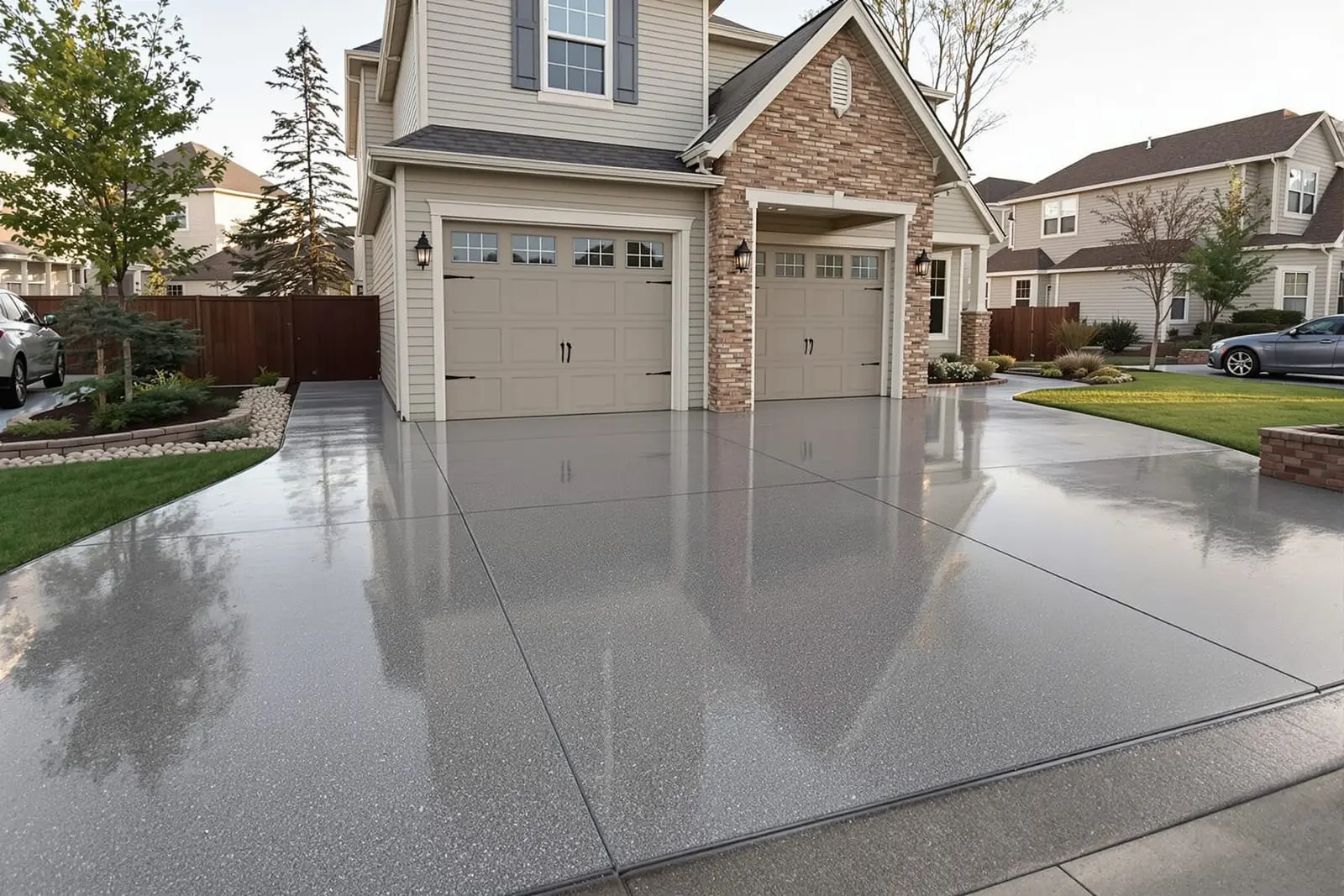
Upgrade your storage and parking space with new concrete garage floors in San Antonio, TX. We pour flat, durable slabs that handle vehicles and equipment. Options include smooth troweled finishes, broom textures, or coatings for added protection.
Vanguard Concrete San Antonio provides professional concrete garage floor throughout San Antonio, TX and the surrounding area. Our licensed, insured crew delivers safe, clean, on-time work with a free estimate before anything begins. Call (726) 200-1600 or request your free quote.
Durable Concrete Garage Floors Tailored to San Antonio Homes
A concrete garage floor is more than a parking surface. It has to handle hot tires in August, sudden cold snaps in January, and years of vehicle fluids, tool drops, and storage racks. Vanguard Concrete San Antonio designs and installs concrete garage floors specifically for Bexar County soil conditions and our Central Texas climate.
We start with the structure, not the finish. Our team evaluates your existing slab or subgrade, looks for edge cracking near garage doors, rusted rebar, or slab movement, and recommends either resurfacing, partial removal, or a full replacement. If your home was built before the early 2000s on the North Side, we pay particular attention to soil movement, since many neighborhoods there sit on expansive clay.
When we pour a new concrete garage floor, we typically use a 4 to 5 inch slab with a 3,000 to 4,000 psi mix, adjusted for your use. Heavier trucks, lifted SUVs, or shop equipment often justify a higher psi mix and thicker slab in specific areas. We place control joints in a layout that matches your garage size and door location. This reduces random cracking and helps the slab move in a controlled way during seasonal moisture changes that are common across San Antonio.
Basement and Lower-Level Concrete Slabs in San Antonio
San Antonio does not have basements in every neighborhood, but when you do have a lower-level space, moisture control and slab stability matter more than the finish. Vanguard Concrete San Antonio evaluates drainage, existing hairline cracks, and any signs of slab heaving or settlement before proposing a solution.
If you have a walk-out basement in areas like Stone Oak or Helotes, slope and water run-off near retaining walls can affect your slab. We may recommend french drains or improved surface drainage outside before we resurface or repair concrete inside. Addressing water at its source usually prevents recurring surface issues such as efflorescence (white mineral deposits) and flaking.
For finished basements intended as living areas, we pay attention to flatness and insulation options. We can pour a new topping slab to correct uneven surfaces, add moisture barriers, and prepare the floor for tile, LVP, or an exposed decorative concrete finish. Our goal is to give you a floor that stays stable, comfortable, and dry during both heavy rain events and long dry spells that San Antonio regularly experiences.
How We Build a Long-Lasting Concrete Garage Floor
Every project starts with demolition and prep. If your existing concrete garage floor is failing, we remove the damaged sections or the entire slab, haul debris off site to appropriate facilities, then inspect the exposed subgrade. In many San Antonio neighborhoods, we encounter expansive clay. Where needed, we re-compact the soil and add a base layer of crushed limestone or road base at 3 to 4 inches, compacted in lifts with a plate compactor.
Next, we install forms that set the slab elevation and slope, usually pitching gently toward the garage door for drainage. We then place welded wire mesh or rebar, depending on span and load requirements. Gateways for future plumbing, electrical conduit, or floor drains can be integrated at this point for homeowners planning workshop or hobby setups.
We pour a ready-mix concrete selected for your project. In the peak of summer, we often schedule early morning placements to reduce rapid surface drying in the San Antonio heat, which helps limit plastic shrinkage cracking. Our team screeds the slab, bull floats to bring up cream, edges, and then adds a broom or smooth trowel finish depending on final coating plans. Control joints are cut within 24 hours, with joint spacing tailored to the dimensions of your garage. Proper curing is critical, so we either apply a curing compound or use wet curing methods to help the slab reach its designed strength.
Resurfacing, Leveling, and Repair for Existing Floors
Not every concrete garage floor or basement slab needs full replacement. Vanguard Concrete San Antonio often restores structurally sound slabs with targeted repairs and resurfacing. We begin with a moisture test and hardness assessment to determine whether patch materials and overlays will bond reliably.
For uneven or settled sections, we might use self-leveling underlayment or localized grinding to remove high spots. Where cracks are present, we distinguish between static cracks (which can be cleaned and filled with epoxy or polyurethane) and active movement cracks (which may require stitching, dowels, or control joint reconfiguration). Oil and chemical contamination are addressed with degreasing, mechanical grinding, or shot blasting so that repair materials adhere properly.
When resurfacing a garage floor, we typically apply a polymer-modified overlay that bonds strongly to prepared concrete. This can restore a worn, stained, or lightly spalled surface without adding excessive height that would interfere with your garage door, thresholds, or vehicle clearance. We discuss realistic expectations for old slabs, including where existing structural issues could limit cosmetic perfection but still produce a durable, functional floor.
Finish and Coating Options for Garage & Basement Concrete Floors
Once the structural work is right, we focus on how you want the floor to look and perform. Vanguard Concrete San Antonio installs several finish systems that hold up to local conditions and typical San Antonio use patterns.
Common choices for garage slabs include densified and sealed bare concrete, multi-coat epoxy systems with color flakes, and polyaspartic topcoats for faster return to service. Bare concrete with a penetrating sealer is cost effective and resists moisture and light staining, but if you regularly work on vehicles or store solvents, an epoxy or polyaspartic system offers better chemical resistance and easier cleaning.
For basements, we often recommend polished concrete with guard sealer, stained concrete for a warm, mottled look, or a smooth slab prepared specifically for LVP or tile. Where a basement will be air conditioned, we consider how light-colored finishes can reduce lighting needs and help keep the space bright. We also address slip resistance around exterior doors and stairs, adding texture or grit to coatings when needed to meet safety expectations.
What Affects the Cost of a Concrete Garage Floor in San Antonio
Homeowners often ask why quotes for a concrete garage floor differ so much. Several factors drive cost in the San Antonio area, and we explain these openly so you can compare proposals accurately.
Access and demolition are major variables. Removing a thick, reinforced slab or hauling debris from a tight alley lot in older neighborhoods can take significantly more labor and equipment time. Soil conditions matter as well. If we need to undercut poor soil, import base material, and compact in layers, that increases cost but also dramatically improves long-term performance.
Thickness and reinforcement level directly affect price. A standard residential garage may only need a 4 inch slab with wire mesh, while a homeowner planning to store a heavy work truck, lift, or large tools may need a thicker slab with rebar grid. Finish type also shifts cost. A simple broom finish with penetrating sealer is less expensive up front than a decorative polished or epoxy flake system, but coatings can reduce long-term maintenance and make fluid cleanup much easier.
We also account for small but important details, such as sawcut control joints, threshold transitions at the garage door, integration with driveway or interior slabs, and any City of San Antonio requirements if the project ties into public right of way or modifies drainage.
Permits, HOA Considerations, and Working in San Antonio Neighborhoods
Most interior garage and basement concrete floor projects within the existing footprint of your home do not require a building permit from the City of San Antonio, since we are not changing structural walls or expanding the foundation. However, if your concrete garage floor project includes extending or altering the driveway, adding a curb cut, or tying into public sidewalks, permit and inspection requirements may apply. Vanguard Concrete San Antonio can coordinate with you and the city when needed.
For HOA communities in places like Alamo Ranch, Rogers Ranch, or Cibolo Canyons, exterior appearance rules may apply to visible concrete areas at garage doors, driveways, and side entries. If a new or resurfaced garage floor changes elevation at the threshold, we help you keep that transition neat and in line with community standards. We can also provide coating color samples or photos when HOAs request design approval.
Scheduling is tailored to your routine. Garage work often means your vehicles will be displaced for at least a few days. We clearly outline curing times for plain concrete, epoxy, and polyaspartic systems so you know exactly when light foot traffic, tool setup, and vehicle parking are safe. By planning around San Antonio weather patterns and your schedule, we minimize disruption while ensuring your new garage or basement concrete floor has the time it needs to cure correctly and perform for years.
“
Professional garage & basement concrete floors, done right the first time, quality materials, honest pricing, and results that last.
Vanguard Concrete San Antonio
Garage & Basement Concrete Floors Across Our Service Area