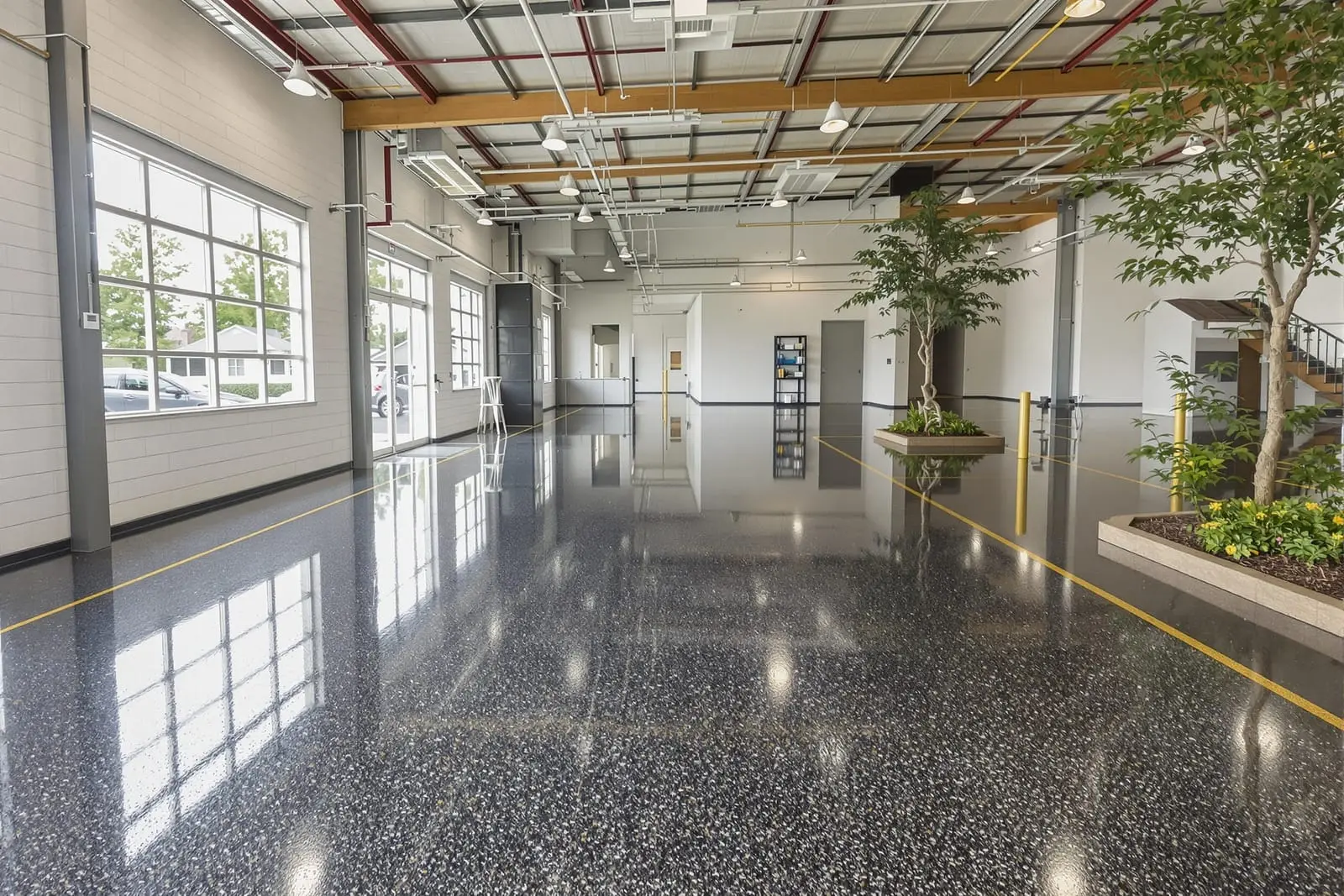
Support heavy loads with industrial concrete floors in San Antonio, TX. We pour thick, reinforced slabs for warehouses, shops, and production areas. Proper joint layout and finishing help resist cracking and wear from forklifts and machinery.
Vanguard Concrete San Antonio provides professional industrial concrete floors throughout San Antonio, TX and the surrounding area. Our licensed, insured crew delivers safe, clean, on-time work with a free estimate before anything begins. Call (726) 200-1600 or request your free quote.
Industrial concrete floors that match how your San Antonio facility really works
At Vanguard Concrete San Antonio, we install industrial concrete floors that are built around how your warehouse or plant actually operates, not just what looks good on a plan. Before we price or pour anything, we walk the space with you, look at racking layouts, forklift paths, dock areas, and where heavy equipment will sit. A distribution center off I-35 will need different slab performance than a light assembly shop near Kirby, even if the square footage is similar.
We start by confirming the intended slab use category (light, medium, or heavy duty) based on live loads, storage heights, and traffic frequency. For example, a 12,000 lb forklift running all day on hard tires calls for a thicker slab and higher strength mix than a simple storage warehouse. We also factor in whether you are using narrow-aisle racking, wire guidance systems, or sensitive equipment that needs tighter flatness and levelness tolerances.
Local soil and moisture conditions around San Antonio affect design choices more than many owners realize. Areas with expansive clay, like parts of the West Side or new industrial parks around Loop 1604, benefit from careful subgrade preparation and moisture mitigation so the slab does not heave or curl. We build these local conditions into the design so your industrial concrete floors keep performing after the building is full and busy.
How we design and build warehouse & industrial concrete floors
Our process for industrial concrete floors is structured so there are no surprises once the facility is in use.
First, we perform site evaluation and subgrade preparation. We check existing soil conditions, compaction levels, and any previous fill or demolition. Soft spots are undercut and replaced with compacted base material, typically crushed limestone common in this region, compacted to specified densities. Proper base prep is what keeps your slab from pumping, settling, and cracking under repeated forklift traffic.
Next is slab design. Working from your engineer’s drawings, or helping coordinate design if needed, we determine slab thickness (often 5 to 8 inches for warehouses, thicker for heavy industrial), rebar or reinforcing fiber strategy, joint layout, and mix design. Joint layout is critical in wide-open warehouse bays. Poorly planned joints are where pallet jacks and forklifts take a beating. We pay close attention to joint spacing, dowel systems at construction joints, and armored joint details at dock doors and high-traffic transitions.
For the concrete mix, we typically use higher strength mixes in the 4,000 to 6,000 psi range, with low water-cement ratios and admixtures tailored for San Antonio’s heat. In summer months, we may use set-retarding admixtures, chilled water, or adjust pour schedules to early mornings or nights to control setting times and reduce plastic shrinkage cracking.
Placement and finishing come next. We use laser screeds on larger pours to achieve consistent thickness and flatness, which is important for racking systems and high-speed material handling equipment. After screeding, we float and trowel the surface, adjusting the finish based on your needs: a tighter, harder finish for heavy forklift traffic, or a more slip-resistant texture in wet processing areas.
Curing and early protection are just as important as the pour itself. We apply curing compounds or use curing blankets, depending on conditions, to keep moisture in the slab so it gains full strength and reduces surface dusting. During the early days after placement, we control traffic and loading so the slab is not damaged before it is ready for service.
Options for finishes, coatings, and joint systems
Different San Antonio facilities need different performance characteristics from their industrial concrete floors. Vanguard Concrete San Antonio can leave a dense, hard-troweled slab as-is or add systems that match the work being done.
For many warehouses, a sealed and densified slab is the best balance of cost and durability. We apply a lithium or sodium silicate densifier that penetrates the concrete, hardens the surface, and reduces dusting, then follow with a compatible sealer. This is common for bulk storage warehouses and cross-dock facilities around Port San Antonio and along Loop 410.
For facilities with chemicals, oils, or strict cleanliness requirements, such as food distribution centers, packaging plants, or light manufacturing, we may recommend epoxy or urethane coatings. These can provide chemical resistance, make cleaning easier, and allow you to color-code traffic aisles and work zones. We coordinate surface prep, including shot blasting or grinding, to ensure coating adhesion on new or existing slabs.
If you have constant forklift traffic or very tight-tolerance racking, we pay special attention to joints and surface profile. Options like armored joint systems with steel angles help protect joint arrises from chipping. For wide panel floors, we may use dowel baskets and engineered joint spacing to minimize curling and differential movement. In some cases, macro fiber-reinforced concrete can help reduce the amount of conventional rebar, simplify placement, and improve crack control when specified appropriately.
Non-slip textures, moisture mitigation membranes under coatings, and conductive or anti-static flooring systems are also available for specialty uses like electronics, aerospace, or defense-related operations common near major San Antonio industrial corridors.
What drives cost for industrial concrete floors in San Antonio
Owners often ask why bids for industrial concrete floors vary so much. Understanding the cost drivers helps you compare proposals fairly and avoid change orders later.
The biggest factors are slab thickness, reinforcement type, and mix design. A 6 inch slab with standard reinforcement will cost more than a 5 inch slab, and a 7 or 8 inch slab for heavy manufacturing will cost more still. Dense rebar mats, post-tensioning, or heavy macro fiber dosages also add cost but may be necessary for the loads involved. Higher strength mixes, moisture mitigation treatments, and special admixtures for challenging conditions add material cost but can prevent expensive problems later.
Subgrade work is another major variable. If your future warehouse is going on previously disturbed land, an older industrial site, or an area with poor drainage, we may need more excavation, base material, and compaction to achieve a stable platform. In San Antonio, we regularly see existing fill that looks fine on the surface but fails compaction tests. Fixing it before the pour is far cheaper than dealing with slab settlement afterward.
Finishes and coatings affect price as well. A basic sealed floor is more economical than a multi-coat epoxy system with striping and safety markings, but the right choice depends on operations. Heavy traffic, chemical exposure, or strict cleanliness standards can justify upgrading the surface system.
Finally, project timing and phasing matter. Night pours to avoid heat, tight production schedules, or working around an active warehouse can require larger crews, specialty lighting, and more coordination. Vanguard Concrete San Antonio plans pour sequences so you can occupy sections of the building on a schedule that fits your move-in or expansion timeline, which can reduce overall business disruption even if the concrete portion of the work is more complex.
Common problems we prevent and how to choose the right contractor
Most of the problems people complain about with industrial concrete floors are avoidable if the work is designed and executed correctly from the beginning.
Curling and cracked joints often come from poor joint layout, thin slabs, or uneven subgrade support. We prevent this with proper base compaction, well-thought-out panel sizes, load-transfer systems at joints, and mix designs that balance strength with shrinkage control. Surface dusting and premature wear usually result from weak surface paste or poor curing. Our crews protect fresh concrete from rapid moisture loss, especially in San Antonio’s hot, dry winds, and we use densifiers or hardeners when appropriate.
Forklift “speed bumps” at joints are another frequent complaint. This usually happens when joints are not straight, are poorly cut, or lack proper doweling and edge protection. By planning joint locations with your rack and traffic layouts, using quality sawcutting techniques, and installing armored joints in high-traffic areas, we keep transitions smooth so your equipment and operators are not fighting the floor every day.
When you evaluate contractors for industrial concrete floors, ask very specific questions. Request examples of local warehouse or plant projects similar in size and load to yours, not just decorative work or driveways. Ask how they plan to manage heat and curing in San Antonio’s climate, what flatness and levelness tolerances they can meet, and how they handle subgrade testing and remediation. A low price that ignores these details often turns into higher long-term costs.
Vanguard Concrete San Antonio is set up for this kind of work. We coordinate with your general contractor, engineers, and racking installers, and we stay involved through pour planning, testing, and early occupancy. The goal is an industrial concrete floor that you do not have to think about for years, because it simply supports your operations day after day.
“
Professional warehouse & industrial concrete floors, done right the first time, quality materials, honest pricing, and results that last.
Vanguard Concrete San Antonio
Warehouse & Industrial Concrete Floors Across Our Service Area